
New Orleans Address Eras
Choose the first source by period. A modern parcel card gives today's legal key. A criss-cross directory is better evidence of occupants after address indexing began. Earlier work often needs a named directory entry, census schedule, deed book, and historical map used together.
| Source | Years it covers | Where held | What it shows |
|---|---|---|---|
| Land index and images | Index from 2014; images from 2005; older subindexes and volumes | Civil Clerk online, office, request | Owners, parties, acts, descriptions |
| Criss-cross sections | 1932 forward; Haines from 1966 | City Archives and NOPL | Names or businesses by address |
| City directories | 1811 forward with gaps, including 1862–1865 | Microfilm, print, card databases | Households, work, spouse, address clues |
| Federal census | Public schedules through 1950 | NARA and library databases | Households at a census date |
| Sanborn maps | 1876–1994 local holdings | City Archives, NOPL, digital volumes | Building and block context |
| One Stop permits | 2007-present | City online search | Dated work and applicant clues |
Previous residents before 1932 cannot be found through a dependable address cross-reference in the regular directory run. Begin with a name or rebuild the old address first.
Anchor New Orleans Previous Residents
The City Property Viewer is the first stop even when the target date is old. Save the site and mailing addresses, owner, GeoPIN, PARID, tax bill number, lot, square, block, and property description. The site line identifies the parcel. The mailing line may lead elsewhere and does not prove where an owner lived.
Parcel keys outlast street text. A house can be renumbered or a street renamed, while the square, lot, and recorded description still tie a deed to the same land. The viewer is updated weekly and is not a title opinion. Confirm ownership through the recorded act.
Note: Keep a dated copy of parcel facts because assessment data can change after a transfer or correction.
Reverse the Orleans Deed Chain
The Civil Clerk land records connect the current owner to prior owners. Search the buyer as grantee, open or request the acquisition act, and record the seller, instrument number, act type, date, and legal description. Then search that seller as the grantee in an earlier purchase.
- Copy the owner and legal description from the Assessor record.
- Find that owner's acquisition deed and verify square and lot.
- Record the seller, who is grantor in that transfer.
- Search the seller as an earlier grantee and compare the land.
- Repeat until the online range ends, then use the clerk or original volume.
- Grantor
- The party transferring an interest in land.
- Grantee
- The party receiving that interest.
- Chain of title
- The linked series of transfers for one parcel.
- Legal description
- The recorded land identity, often lot, square, and district.
Successions, donations, judgments of possession, trusts, marriage contracts, and usufructs can transfer interests without a sale. Search the proper document type and party role before deciding a link is missing.
New Orleans Index Cutoffs
The online system is not one continuous date range. Land indexing begins February 18, 2014, while land images go to 2005. The separate mortgage index covers September 21, 1987 through February 14, 2014. Conveyances cover January 1, 1989 through February 14, 2014. General Clerk data entry reaches 1985, but that does not guarantee an image.
A result with only a CIN, MIN, or former archive number is still useful. Save it and ask for the image. Paid remote subscriptions are available, but in-office research and public-record requests are documented alternatives. Original notarial holdings begin in 1735, reflecting more than 275 years of recorded New Orleans land history.
Fix New Orleans Street Changes
The current numbering system dates to the early 1890s. Before it, New Orleans lacked one standard scheme. The City Archives number-change index gives old right- and left-side numbers, new hundred blocks, cross streets, and municipal districts for 1852–1938. It does not convert each building with certainty.
The name-change index provides old and new names, ordinances or dates, notes, and districts. Search the nearest cross street, both names and number forms, plus square and lot. This is vital in old municipalities and faubourgs where a district label may not match a modern neighborhood.
This New Orleans quirk can make past residents seem to vanish. Often the address changed while the parcel did not.
Pair New Orleans Directory Years
The first street-address cross-reference appears in 1932. Haines criss-cross books begin in 1966, and later volumes may sort by phone. For older years, search a resident by name and use the key to distinguish home from work. Full holdings belong with the New Orleans city directory collections; an address history uses only the volumes needed for one household.
Use this evidence flow: normalized address to directory resident, directory resident to a nearby year, then name and ward to the closest public census. Compare spouse, work, and household clues. A directory was issued between census dates and may catch a move that a ten-year schedule misses.
- Select directory years just before and after the target date.
- Copy the entry exactly, including household and spouse marks.
- Test the same name and address in the nearest census year.
- Use newspapers, vital indexes, or probate to explain a disappearance.
A 1855 local example puts one man's work on Gravier and dwelling on Constance. That human detail warns against treating every address in an entry as a home.
Date a New Orleans House
Sanborn fire-insurance maps show building footprints, use, and block arrangement. New Orleans holdings span 1876–1994. Compare editions to see if the same structure stood when previous residents appeared in directories. A digitized 1908 Library of Congress volume has 126 sheets, while NOPL and City Archives provide other access routes.
The One Stop portal adds permit, project, license, and violation history from 2007 forward. Search by house number and street, filter by date and type, and export results. An applicant or contractor is a work-event clue, not proof of residence. Older plans, utility records, surveys, and taxes require City Archives research channels.
Close New Orleans Resident Trails
When a name disappears, obituaries and succession files may explain death, heirs, or transfer. The City Archives obituary index spans 1804–1972. NOPL newspaper databases include the Times-Picayune from 1837 and several predecessor papers. Successions, wills, estate inventories, and judgments of possession can connect a deceased owner to the next deed.
Open the Louisiana State Archives vital-record index shown in the first capture.
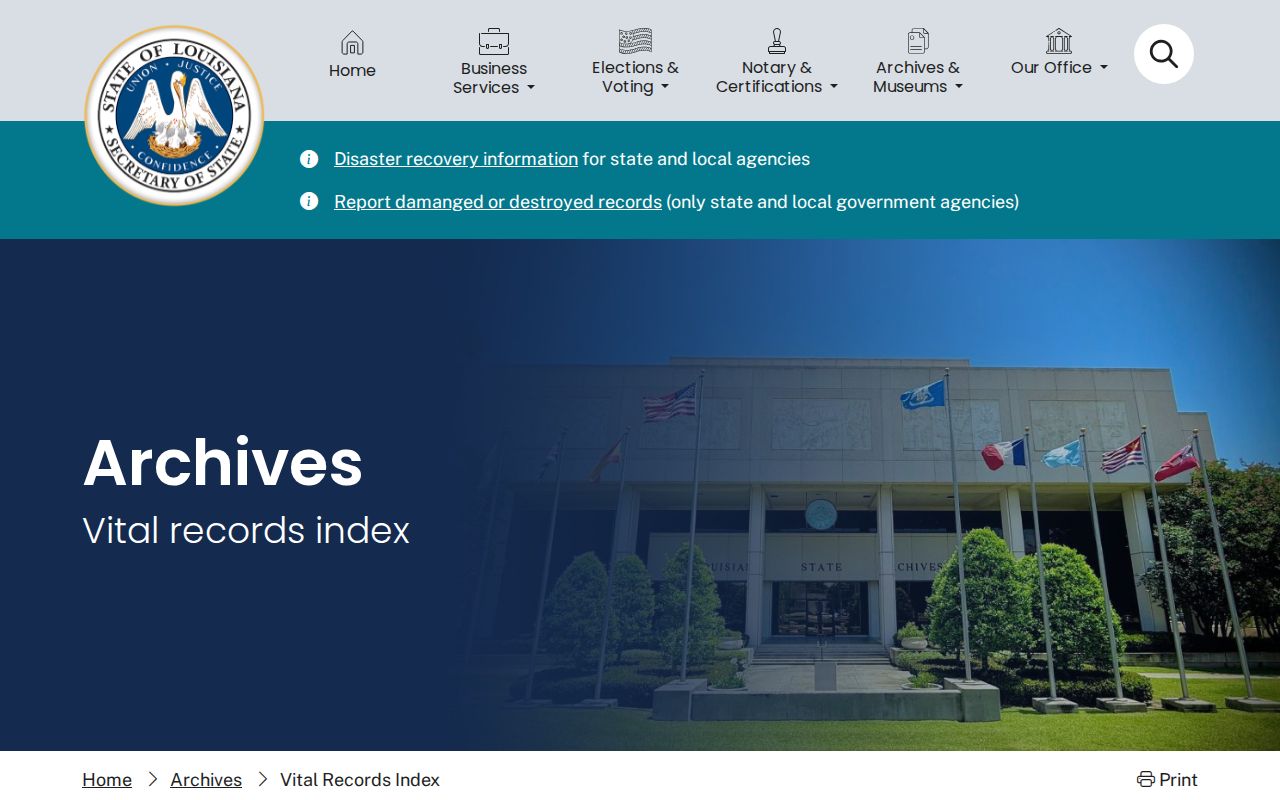
The index supplies dates and record references that can explain a change in a household.
Search the Orleans historical marriage index, whose microfilmed coverage runs from 1870 through 1975.
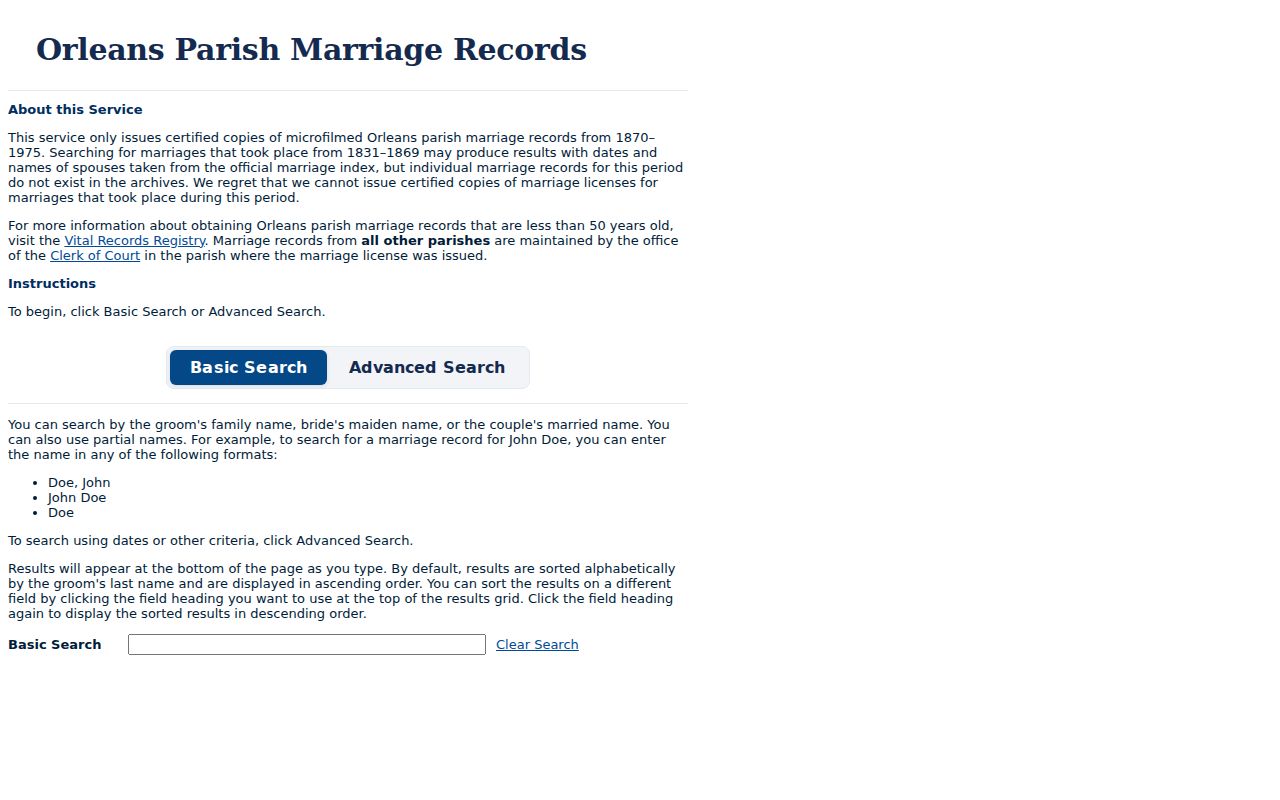
A marriage result can link surnames before a church, newspaper, or directory search.
New Orleans Kinship Records
Cemetery and church records help when civil and street sources fall silent. HNOC's cemetery database covers St. Louis No. 1 and No. 2 with names, condition reports, photographs, keywords, and maps.

Family tombs, sections, and inscriptions may connect former occupants whose surnames changed.
The Archdiocese of New Orleans genealogy service documents sacramental, cemetery, and targeted request routes.
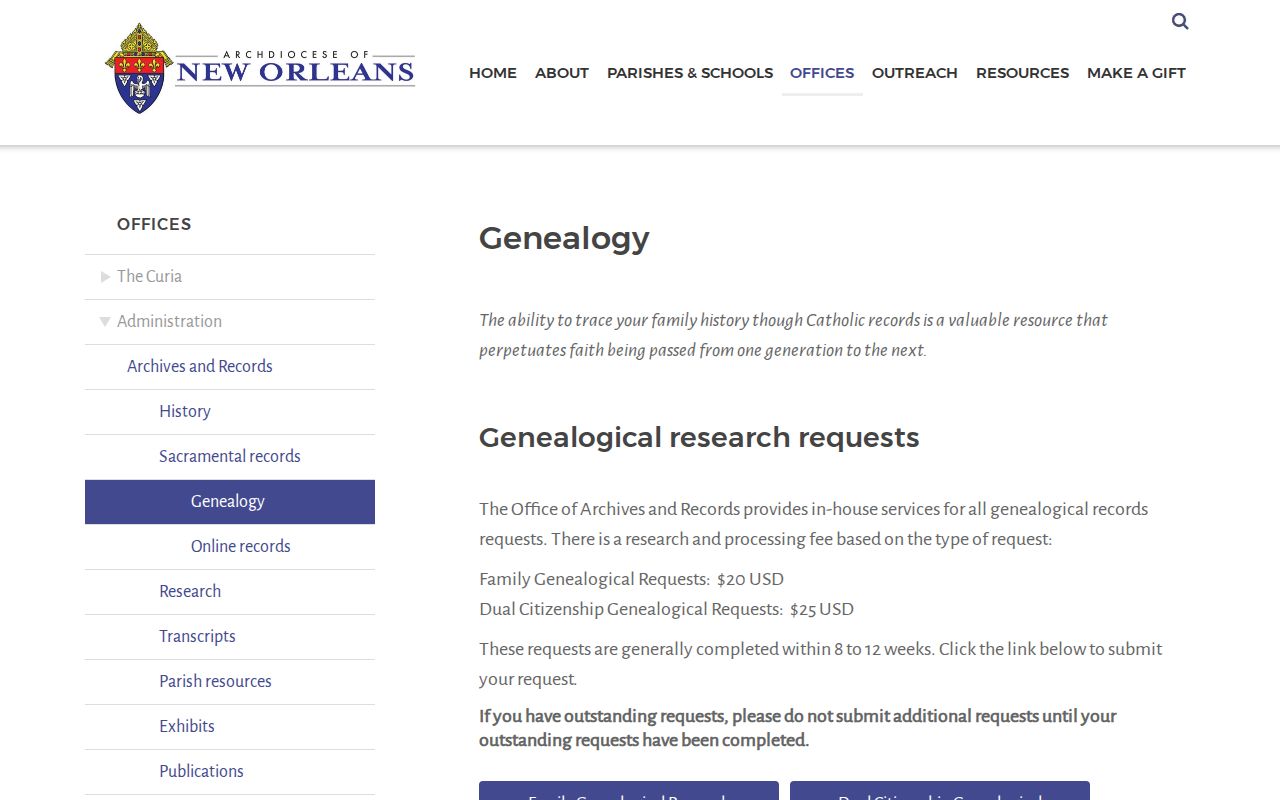
Provide names, dates, and a church when possible, using a marriage or directory clue to make the request precise.
New Orleans Previous Residents Limits
Owners are only part of an address story. A deed can name an entity or absentee owner. A directory may list a renter, household head, spouse, or business. Census records capture one date and use historic ward and race labels. None is a live roster of everyone who used the property.
Current residents deserve privacy. Louisiana's Address Confidentiality Program protects qualifying participants with a substitute address. Utility and DMV data are not public household lists. Do not fill gaps with a commercial compilation that merges old and new people without dates or labels.
Lawful use. Research previous residents for house history, genealogy, heirs, and personal curiosity. Never use address history to track, threaten, or harass a living person.
A sound New Orleans address history ends with uncertainty marked. Keep a citation, year, and evidence type beside every person, and distinguish who owned the parcel from who lived there before.