
Finding New Orleans Residents
Let what you already know pick the first record. An exact address points to the City Property Viewer and the Orleans Parish Assessor search. A name with a birth month and ZIP fits the Louisiana Voter Portal. A business name or officer fits the Secretary of State commercial index. Older names call for a city directory, obituary card, marriage index, or succession file. Every source records a different event. So one hit should open a second source rather than end the lookup.
Official rolls have gaps. The property roll lists assessed owners, including companies and trusts, not every occupant. The voter system covers registered voters and holds back specified fields. Court indexes leave out sealed, confidential, expunged, or unindexed material. Printed directories skipped plenty of people. A careful New Orleans residents directory search treats a match as evidence of a link at one moment, not proof of where a person lives today.
- Search an address or owner in the Assessor and Property Viewer. Save the situs address, mailing address, tax-bill number, and GeoPIN.
- Use the official voter portal by person or address. Compare the ZIP and apartment or lot field.
- Check civil, municipal, traffic, or criminal court indexes only when the question calls for a case trail.
- Follow business, license, permit, vital-index, and archive leads that fit the person's likely activity and era.
- Ask the custodian for an image, certified copy, or older file when an online index stops short.
New Orleans Records Custodians
New Orleans and Orleans Parish share the same ground. Yet their records sit with city, parish, and state custodians. The Civil District Court Clerk now holds Land Records, Conveyances, Mortgages, and Notarial Archives. The Assessor keeps assessment data, and the City maps much of it by parcel. The Orleans Registrar handles local voter service under state election law. For a block-by-block approach, the New Orleans street directory walks a street house by house.
Orleans Civil Clerk Land Records
1340 Poydras Street, Suite 360
New Orleans, LA 70112
504-407-0005
Orleans Parish Assessor
1300 Perdido Street, Room 4E01
New Orleans, LA 70112
504-658-1300
Orleans Registrar of Voters
1300 Perdido Street, Room 1W24
New Orleans, LA 70112
504-658-8300
New Orleans Property Viewer Clues
The City Property Viewer takes an address, an owner name, or a tax-bill number. Click a parcel and it can return the GeoPIN, assessed owner, owner mailing address, situs address, square, lot, and assessment values. You also get building data and links to tax or permit information. The GeoPIN is the local geographic parcel identifier. Save it before chasing a name. Spelling and street formatting drift over time, but the parcel identity stays put.
The owner mailing address may differ from the situs, which is the physical property address. That gap can point to an owner living elsewhere, an entity, or a mailing preference. It will not reveal a renter. The Assessor also cautions that its data serves assessment purposes. It is not a title opinion. For a title chain, move from the parcel to the Civil Clerk's recorded acts.
The New Orleans One Stop search page shows how a parcel lead branches out. Permits, licenses, planning projects, and violations all hang from that one lead.
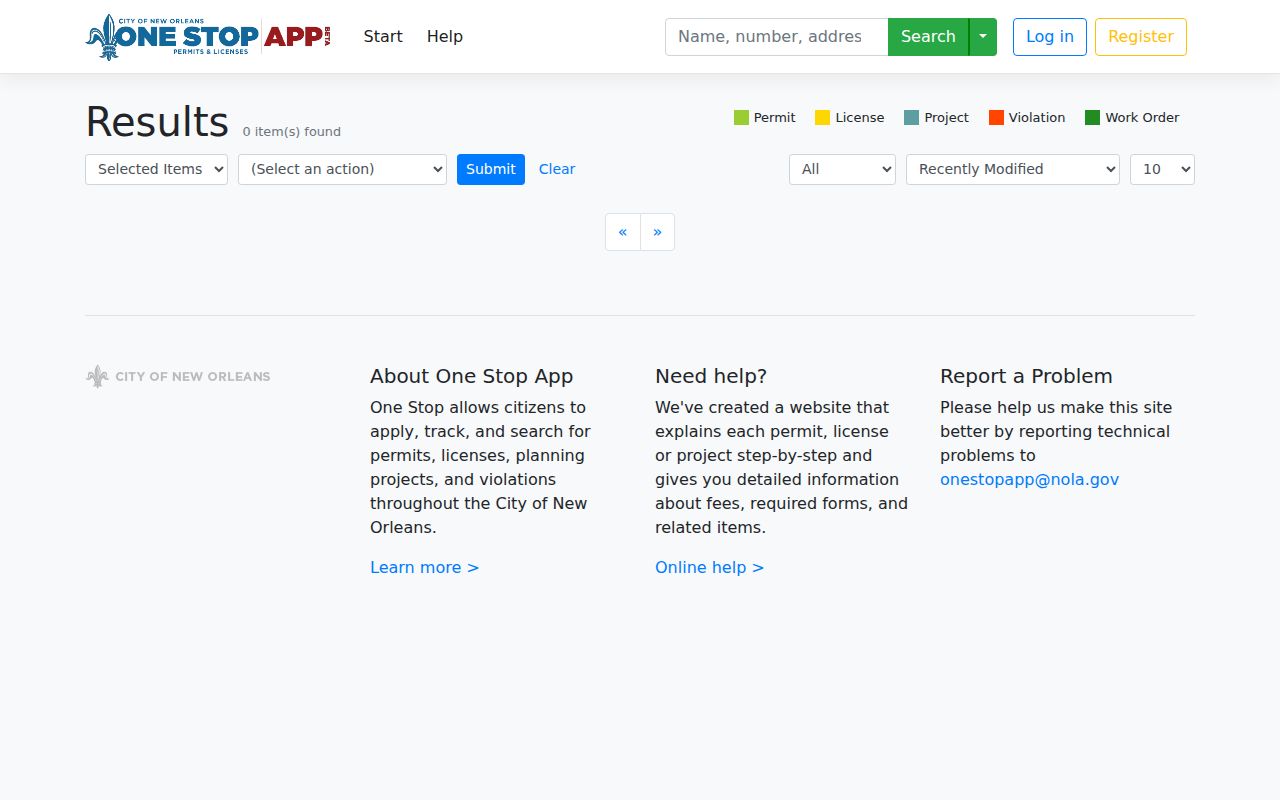
Those filings name applicants, owners, professionals, and contacts tied to a case. That context is useful, but none of it amounts to a current household roster.
New Orleans Voter Address Search
The Louisiana voter search by address asks for ZIP, street number, and street name. It also wants an apartment or lot. It returns voters linked to that address in the public interface. The person search runs on name, ZIP, and birth month and year instead. Address records and voter records do not always connect in one public display. When the first method returns nothing, run both.
Louisiana Revised Statute 18:154 opens many registration fields during office hours. It withholds Social Security and driver's-license numbers, day and month of birth, and most email information. Protected addresses stay hidden too. The portal also times out after 20 minutes. Save only the facts needed for lawful personal research.
The official voter-name form sits on the Secretary of State portal.
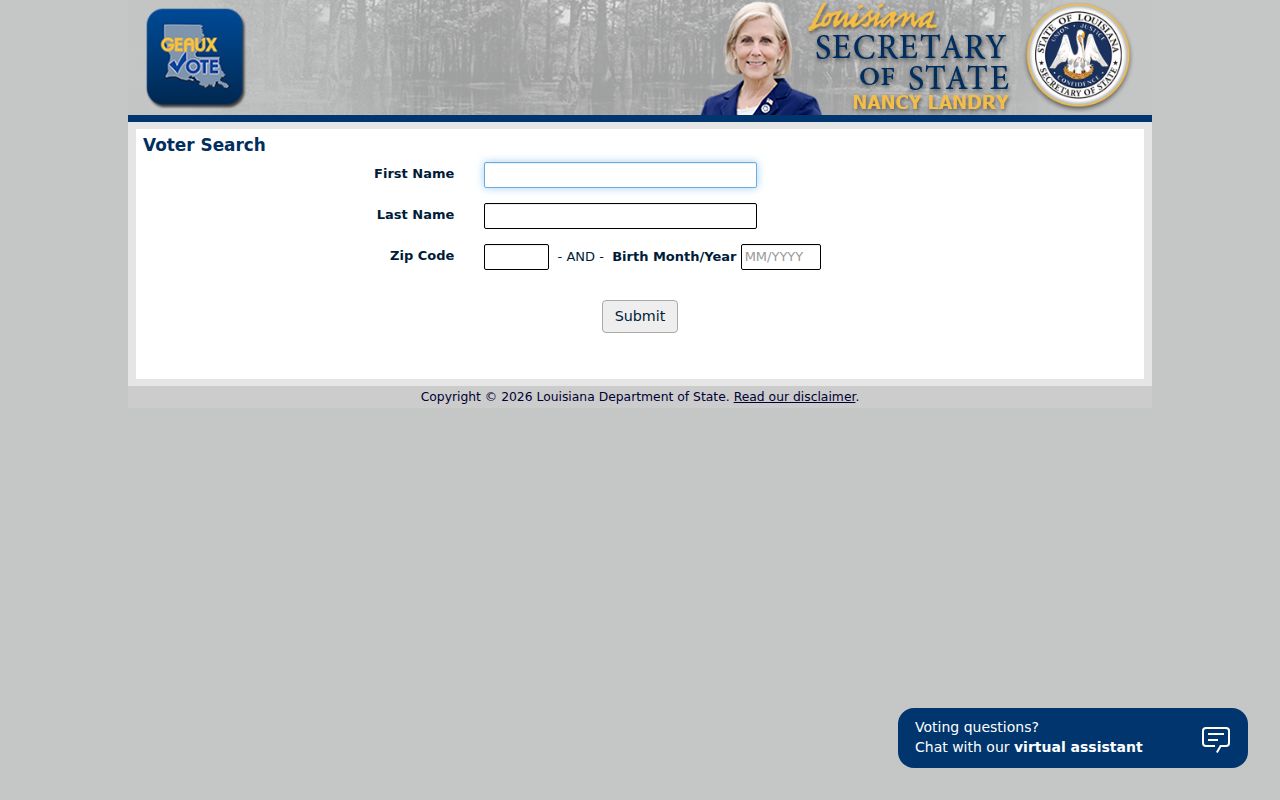
The identity fields do help separate voters who share a name. Still, a registration never proves that every person in a household lives at that address.
Current New Orleans Resident Rolls
The modern New Orleans residents directory is really a set of purpose-built indexes. Property rolls connect owners to parcels. Voter records connect registrations to addresses. Recorded acts connect parties to land or obligations. One Stop ties named participants to local filings. Business and professional systems connect people to public roles. Pick the roll that records the activity you care about.
| Resident source | Connection shown | Official keeper | Public route |
|---|---|---|---|
| Assessment roll | Owner, parcel, mailing and situs addresses | Orleans Parish Assessor | Free web search; data request |
| Voter Portal | Public registration tied to a name or address | Louisiana Secretary of State | Free official lookup; protected fields withheld |
| Land Records index | Parties to deeds, mortgages, liens, and notarial acts | Orleans Civil Clerk | Remote subscription; office research |
| One Stop | Applicants and contacts on permits, licenses, projects, and violations | City of New Orleans | Free search and export |
| CORA and license boards | Officers, agents, entities, and credentials | Louisiana agencies | Free board-specific searches |
None of them is a complete people list. An owner may live out of state, a voter may have moved, and a permit contact may just be a contractor. So compare at least two independent records before you settle a lookup.
New Orleans Court Name Trails
A docket records events, not people. That distinction matters for anyone using court sources alongside a New Orleans residents directory. The Civil Clerk Online Records indexes civil parties, successions, foreclosures, judgments, liens, and recorded acts. Date ranges differ across clerk data, indexes, and images. The Municipal and Traffic Court search takes a case number, a first and last name, or a date of birth. Pre-2002 cases go to court staff instead, per the site's own notice.
For criminal and traffic matters, Clerk Connect handles inquiry, minute, daybook, and calendar searches. A docket is only the court's event list. It is neither the full file nor a certified disposition. Juvenile files, sealed matters, and expunged records carry statutory limits. Federal cases live in PACER, not a local portal.
The Civil Clerk access page shows which routes are online, in-office, or by subscription.
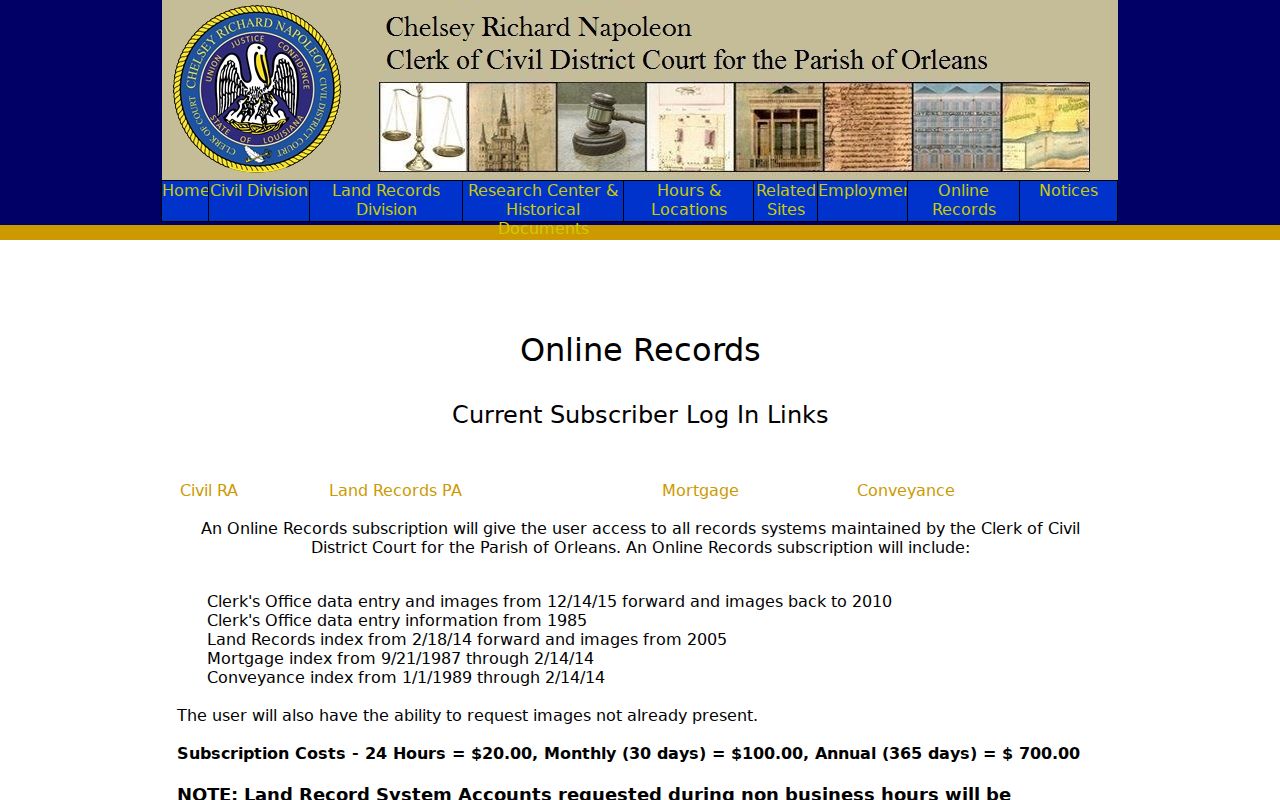
Dockets often stop at index entries. When documents are missing, request the file from the proper New Orleans clerk with the case name, number, date range, and copy type you need.
New Orleans Business Connections
Business filings can place a person in a professional role. The Louisiana Secretary of State CORA Commercial Search accepts an entity name, charter or trade number, name-reservation number, or officer and agent name. It can confirm someone held a public business role. It can also show they received service for an entity. It cannot establish a home address. Pair the filing with a parcel, court, or directory record when residence is the question.
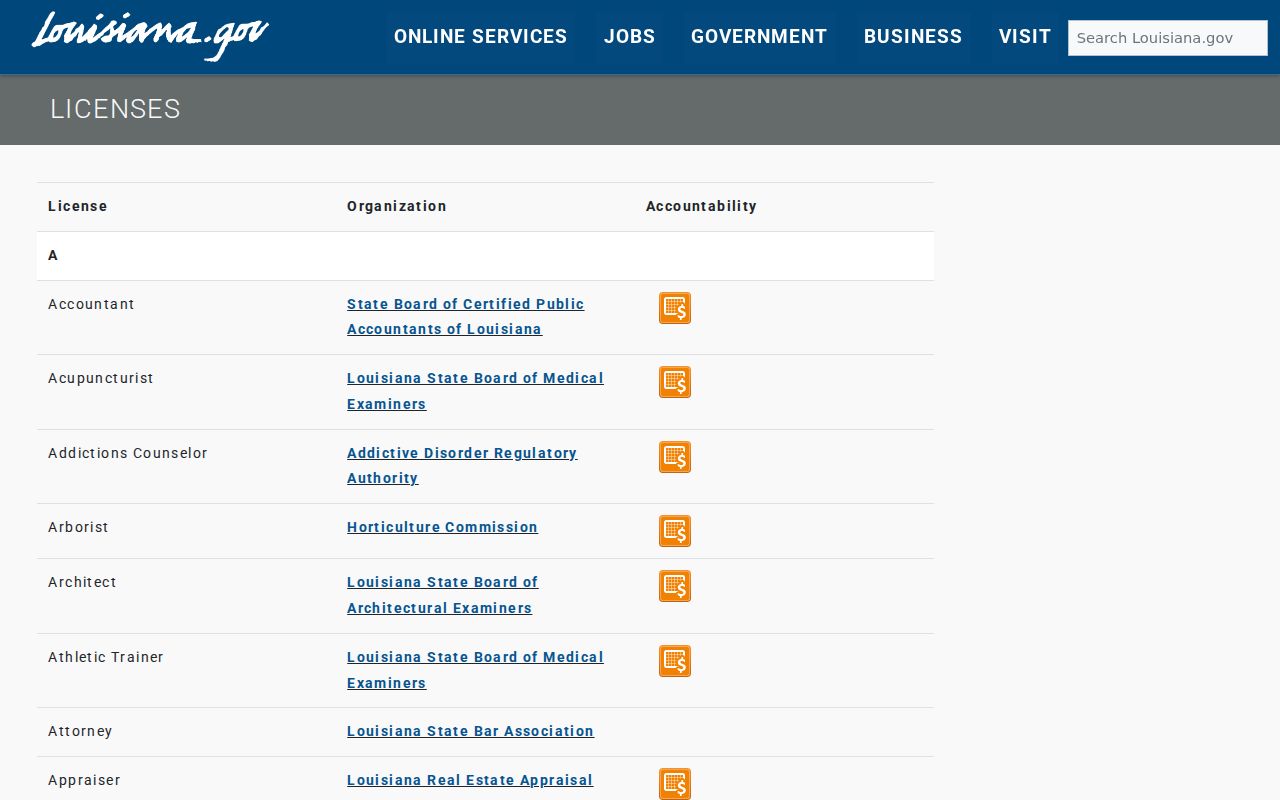
The Louisiana licenses directory routes visitors to the boards that verify credentials. Boards cover medical, legal, contractor, real-estate, cosmetology, teaching, and other fields. Fields differ by board. Status and business address can help separate two people with the same name. A license record may still list an office rather than a home.
The official commercial-search screen shows the search fields as the state publishes them.
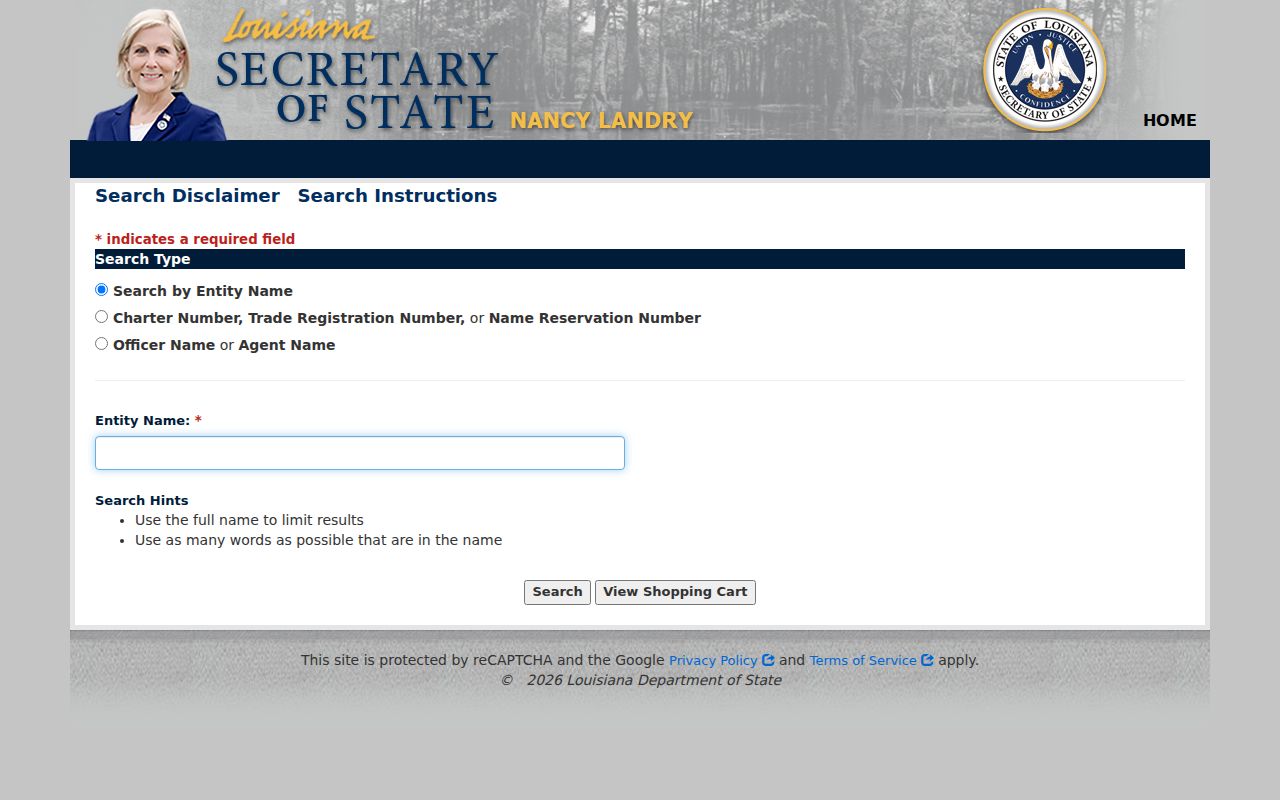
Inspect the actual filing before trusting any same-name result in a New Orleans business search.
New Orleans Vital Record Limits
The state health department holds birth and death certificates. Restricted-period Orleans Parish marriages sit there too. Under Louisiana Revised Statute 40:41, birth records stay confidential for 100 years and death records for 50. Eligible relatives and authorized representatives must show identification. After the restricted span, records move to the Louisiana State Archives under R.S. 40:73, where historical indexes and copy services support family research.
Marriage certificates under 50 years come from LDH. Older Orleans marriages appear in the State Archives index. Divorce decrees stay with the Civil District Court Clerk rather than Vital Records. Mail, walk-in, and authorized vendor channels carry different fees and timing, so follow the current agency instructions.
Historical New Orleans Resident Directories
New Orleans directories predate Louisiana statehood. The City Archives run is long and uneven, drawn from several publishers. A gap runs from 1862 through 1865. An entry may list a spouse, occupation, employer, business location, and dwelling. The address section starts in 1932. Before that, address research usually starts from a resident name or the separate street-name and number indexes.
The full New Orleans city directory treatment explains publishers, coverage, abbreviations, and access. The City Archives, Louisiana State Archives, Historic New Orleans Collection, Archdiocesan Archives, and library databases each fill different gaps. A directory entry shows what a publisher reported that year. Confirm it against deeds, censuses, obituaries, or successions.
New Orleans Custody Lookups
Custody systems answer a narrow public-safety question. The Orleans Parish roster runs on LA VINE, which warns that its display is not an official public document. Louisiana DPS&C offers a statewide route for incarcerated persons and community supervision, updated on its own schedule. The federal Bureau of Prisons keeps a separate locator. A blank result is not proof of no record.
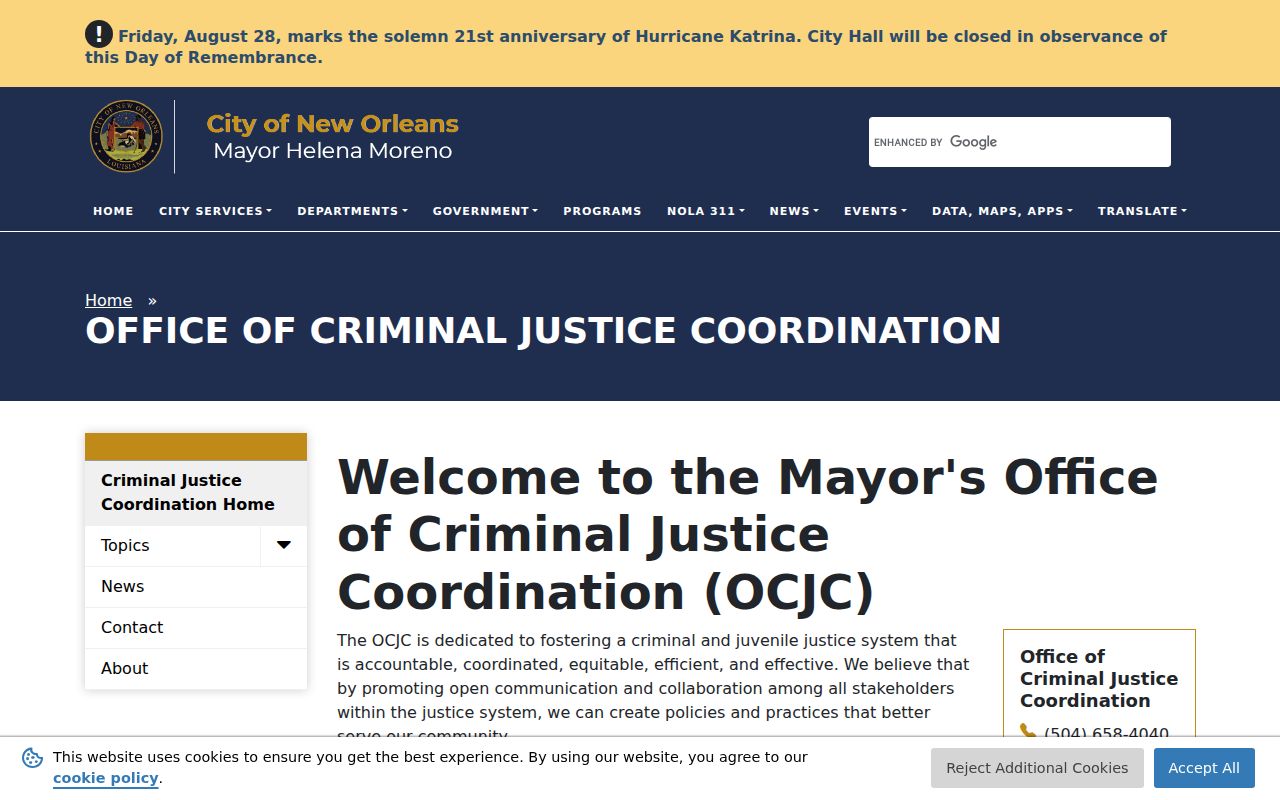
For court-side research, the City Criminal Justice Coordination page shows the current Clerk Connect route.
Court dockets, jail status, state custody, and federal custody each have a different keeper. Update cycles differ too, so keep the four straight.
New Orleans Traffic Case Search
A traffic or municipal citation can yield a middle name, a date of birth, and a case number. It can also yield a dated New Orleans connection. The Municipal and Traffic Court portal covers only that court. Cases filed before 2002 must go through court staff. Two similar names may not be the same person. Compare the date of birth or the case number before assuming a match. Use the docket details to anchor the name to a place and time.
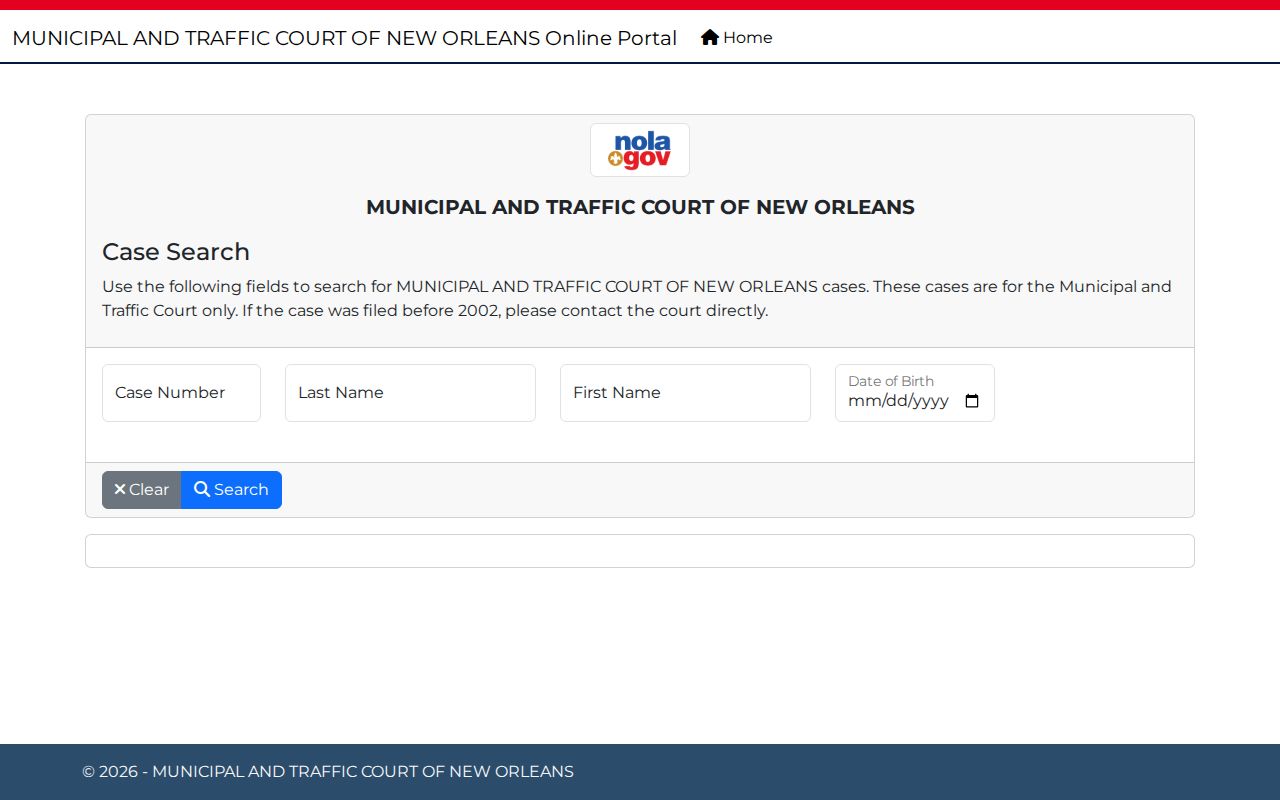
A result is only a docket lead. Ask the New Orleans court for the underlying record or a certified disposition when the distinction matters.
Protected New Orleans Addresses
Louisiana's Address Confidentiality Program gives eligible survivors a substitute mailing address. Under R.S. 44:51 through 44:57, participant names and physical-address records stay confidential, and voter records use the substitute address. The program is not a puzzle to reverse-engineer. Stop when an official system withholds a protected location.
Lawful use. Public records may support genealogy, estate work, reconnection, consumer verification, and civic research. Never use them to stalk, harass, intimidate, or harm a person.
Commercial people-finder data can be stale, merged, or drawn from unclear feeds. Official custodians explain a record's date, purpose, and correction route. Correct disputes with the creating office, not another directory.
New Orleans Records Request Route
Louisiana's Public Records Law, R.S. 44:1 and following, covers records made or held in public business, subject to exemptions. R.S. 44:32 allows inspection and copies; custodians may set reasonable charges and require advance payment. Examination fees are barred. Ask for electronic delivery when available.
City departments start with the City public-records request page. Land and civil material goes to the Civil Clerk. Criminal files belong to the Criminal Clerk. When status or an exemption is uncertain, the custodian must provide the written notice required by law. Narrow requests cut delay and fee surprises.
A precise packet speeds everything. Identify the document, office, date range, and any person, parcel, instrument, or case number. Include exact spellings, alternate names, and the identifier from your first portal search. Land requests should carry the GeoPIN, square, lot, and instrument number. For a court file, give the case number. Specify an index entry, the full file, or a certified copy. Vital records require event details, relationship, identification, and the correct agency form, while archive questions should name the directory year, newspaper title, church, ward, or former street name.
Verify New Orleans Record Claims
New Orleans records sit between old paper series and changing systems, as when city workers searched a landfill in 2025 for discarded criminal-court records. Modernization helps. It does not make every historic file complete. Save the URL, access date, instrument or case number, and custodian contact for each result that matters.
Scams imitate official work too. No court demands jury-duty payment by call or text. A deed warning deserves a check against the Civil Clerk's recorded instrument, and owners can review the recording-notification service promoted by the Assessor. The official source matters more than a caller's urgency.
Match the record date to the question. An assessment refreshed this week may still list an owner whose mailing address sits outside Orleans Parish. Voter rolls record election status, not every person at a property. A directory volume reflects its publication cycle, and an obituary or succession may explain why a name disappears. When sources conflict, keep both citations and ask the office that created the newer record about corrections or superseding documents.
One safer pattern stands out. Begin at a government routing page, then continue to the board that owns the record; the Louisiana license directory is a good starting point.
Verify the name, number, date, status, and office first.