
Finding New Orleans Residents
Choose the first record by what is known. An exact address belongs in the City Property Viewer and Orleans Parish Assessor search. A name, birth month and ZIP can go into the Louisiana Voter Portal. A business name or officer belongs in the Secretary of State commercial index. Older names often require a city directory, obituary card, marriage index, or succession file. Each source records a different event, so one result should lead to a second source rather than end the search.
Official rolls have gaps. The property roll lists assessed owners, including companies and trusts, not every occupant. The voter system covers registered voters and protects specified fields. Court indexes omit sealed, confidential, expunged, or unindexed material. Printed directories miss people who were not listed. A careful New Orleans residents directory search treats a match as evidence of a link at a stated time, not proof that a person lives there today.
- Search an address or owner in the Assessor and Property Viewer. Save the situs address, mailing address, tax-bill number, and GeoPIN.
- Use the official voter portal by person or address. Compare the ZIP and apartment or lot field.
- Check civil, municipal, traffic, or criminal court indexes only when the question calls for a case trail.
- Follow business, license, permit, vital-index, and archive leads that fit the person's likely activity and era.
- Ask the custodian for an image, certified copy, or older file when an online index stops short.
New Orleans Records Custodians
New Orleans and Orleans Parish cover the same territory, but their records are split among city, parish, and state custodians. The Civil District Court Clerk now holds Land Records, Conveyances, Mortgages, and Notarial Archives. The Assessor maintains assessment data, while the City displays much of it on a parcel map. The Orleans Registrar handles local voter service under state election law. For a street-by-street method, use the New Orleans street directory.
Orleans Civil Clerk Land Records
1340 Poydras Street, Suite 360
New Orleans, LA 70112
504-407-0005
Orleans Parish Assessor
1300 Perdido Street, Room 4E01
New Orleans, LA 70112
504-658-1300
Orleans Registrar of Voters
1300 Perdido Street, Room 1W24
New Orleans, LA 70112
504-658-8300
New Orleans Property Viewer Clues
The City Property Viewer accepts an address, owner name, or tax-bill number. A parcel click can return the GeoPIN, assessed owner, owner mailing address, situs address, square, lot, assessment values, building data, and links to tax or permit information. A GeoPIN is the local geographic parcel identifier. Preserve it before following a name because spelling and street formatting can change while the parcel identity remains stable.
The owner mailing address may differ from the situs, meaning the physical property address. That difference may signal an owner who lives elsewhere, an entity, or a mailing preference. It does not identify a renter. The Assessor also warns that its data is for assessment use and is not a title opinion. For a title chain, move from the parcel to the Civil Clerk's recorded acts.
The manifest capture from the New Orleans One Stop search shows how a parcel lead can branch into permits, licenses, planning projects, and violations.
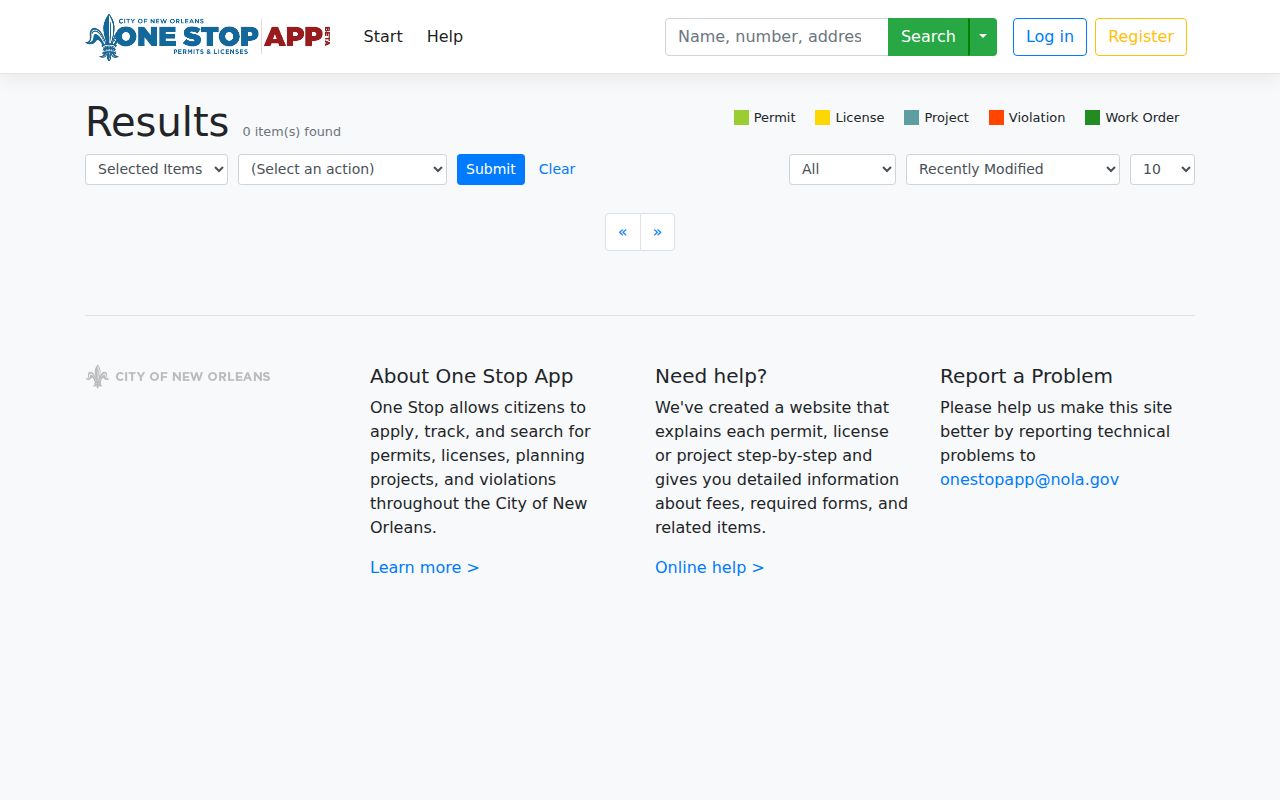
Those records name applicants, owners, professionals, or contacts tied to a filing, which is useful context but not a current household roster.
New Orleans Voter Address Search
The Louisiana voter search by address uses ZIP, street number, street name, and apartment or lot. It returns voters associated with the entered address in the public interface. The person search instead uses name, ZIP, and birth month and year. Because address records and voter records are not linked in every public display, run both methods when the first returns no match.
Louisiana Revised Statute 18:154 opens many registration fields during office hours while withholding Social Security and driver's-license numbers, day and month of birth, most email information, and protected addresses. The portal also times out after 20 minutes. Save only the facts needed for lawful personal research.
The official voter-name form appears in the captured screen below.
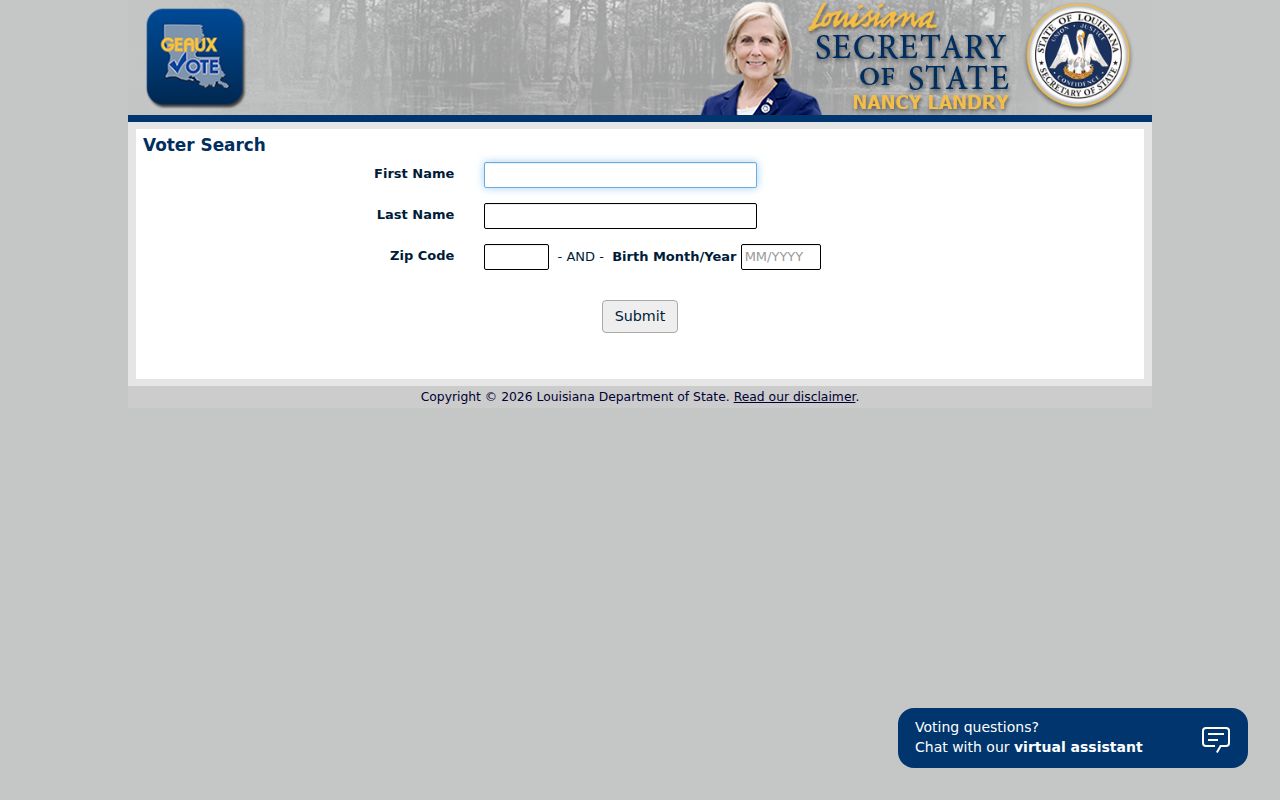
The required identity fields help separate people with the same name, but a registration is not proof that every member of a household lives at the address.
Current New Orleans Resident Rolls
The present-day New Orleans residents directory is a group of purpose-built indexes. Property records connect owners to parcels. Voter records connect registrations to addresses. Recorded acts connect parties to land or obligations. One Stop ties named participants to local filings. Business and professional systems connect people to public roles. Choose the roll that records the activity in question.
| Resident source | Connection shown | Official keeper | Public route |
|---|---|---|---|
| Assessment roll | Owner, parcel, mailing and situs addresses | Orleans Parish Assessor | Free web search; data request |
| Voter Portal | Public registration tied to a name or address | Louisiana Secretary of State | Free official lookup; protected fields withheld |
| Land Records index | Parties to deeds, mortgages, liens, and notarial acts | Orleans Civil Clerk | Remote subscription; office research |
| One Stop | Applicants and contacts on permits, licenses, projects, and violations | City of New Orleans | Free search and export |
| CORA and license boards | Officers, agents, entities, and credentials | Louisiana agencies | Free board-specific searches |
None is a complete people list. An owner may live elsewhere, a voter may have moved, and a permit contact may be a contractor. A one-person lookup should therefore compare at least two independent records.
New Orleans Court Name Trails
Court records are event indexes, not resident lists. The Civil Clerk Online Records covers civil parties, successions, foreclosures, judgments, liens, and recorded acts, with different date ranges for clerk data, indexes, and images. The Municipal and Traffic Court search accepts case number, first and last name, and date of birth. Its warning directs pre-2002 cases to court staff.
Clerk Connect offers criminal and traffic inquiry, minute, daybook, and calendar searches. A docket is the court's event list. It is not the complete file or a certified disposition. Juvenile files, sealed matters, and expunged records have statutory limits. Federal cases use PACER instead of a local portal.
The captured Civil Clerk access page helps distinguish an online index from office and subscription routes.
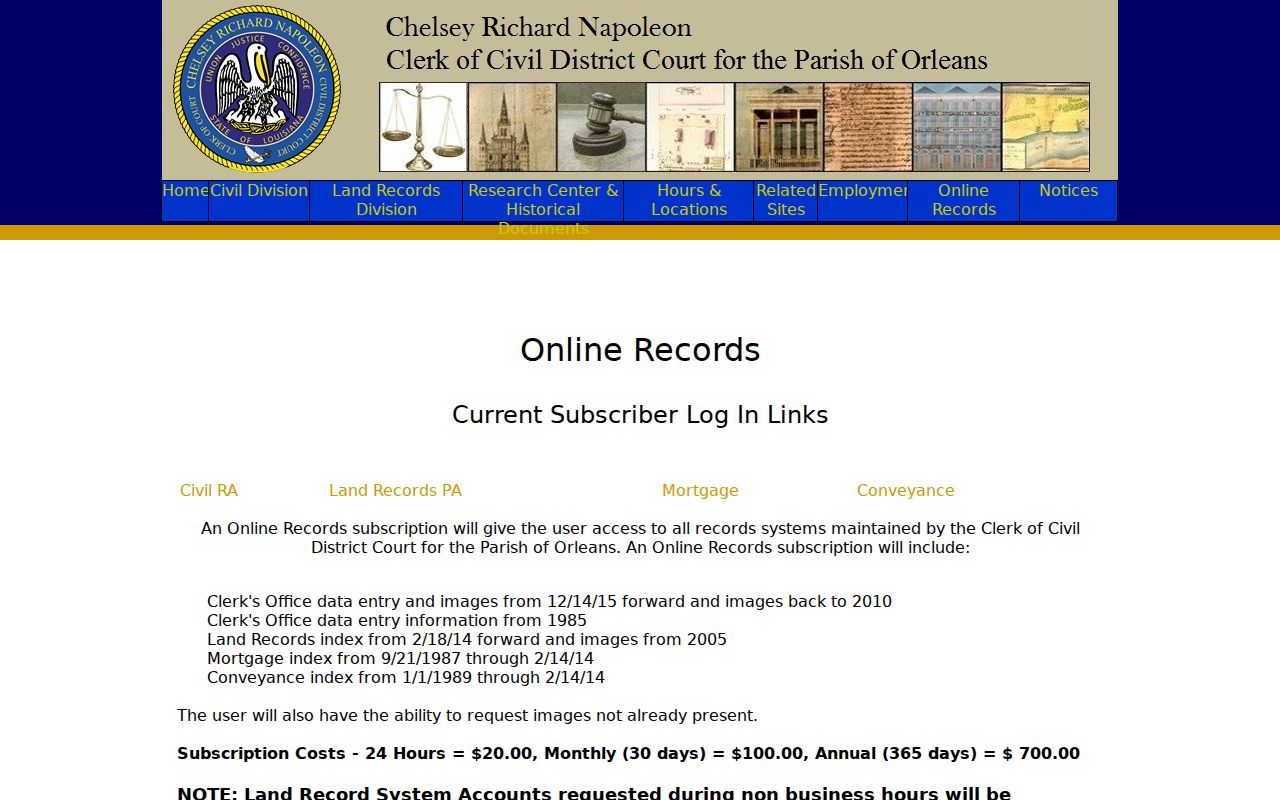
If a result lacks documents, request the file from the proper clerk with the case name, number, date range, and desired copy type.
New Orleans Business Connections
The Louisiana Secretary of State CORA Commercial Search accepts an entity name, charter or trade number, name-reservation number, and officer or agent name. It can confirm that a person held a public business role or received service for an entity. It does not establish a home address. Pair the filing with a parcel, court, or directory record if residence is the question.
The Louisiana licenses directory routes to the boards that verify medical, legal, contractor, real-estate, cosmetology, teaching, and other credentials. Fields differ by board. Status and business address can help separate names, but a license record may use an office rather than a home.
The official commercial-search screen is preserved in the manifest capture.
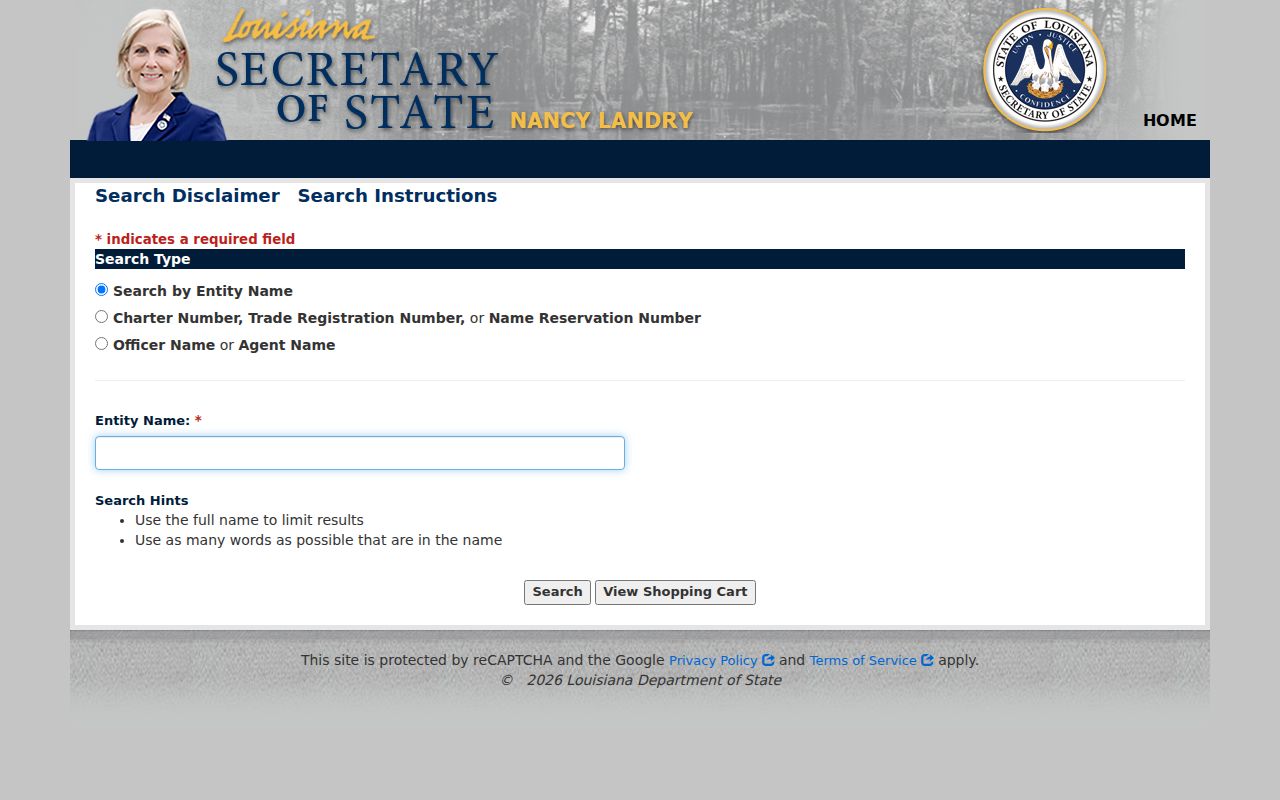
Search common spelling variants and inspect the actual filing before relying on a same-name result.
New Orleans Vital Record Limits
The Louisiana Department of Health handles birth and death certificates and Orleans Parish marriage records within the restricted period. Birth records remain confidential for 100 years and death records for 50 years under Louisiana Revised Statute 40:41. Eligible relatives and authorized representatives must provide identification. Older records transfer to the Louisiana State Archives under R.S. 40:73, where historical indexes and copy services support family research.
Orleans marriage certificates issued within 50 years come from LDH. Older Orleans marriages can be searched in the State Archives index. Divorce decrees remain with the Civil District Court Clerk, not Vital Records. Mail, walk-in, and authorized vendor channels have different fees and timing, so use the current agency instructions.
Historical New Orleans Resident Directories
New Orleans directories predate Louisiana statehood. The City Archives holds a long, uneven run from several publishers, with a gap during 1862 through 1865. Entries may give a spouse, occupation, employer, business location, and dwelling. The address or criss-cross section begins in 1932, so earlier address research usually starts with a resident name or the separate street-name and number indexes.
The full New Orleans city directory treatment explains publishers, coverage, abbreviations, and access. The City Archives, Louisiana State Archives, Historic New Orleans Collection, Archdiocesan Archives, and library databases fill different gaps. A directory entry shows what a publisher reported for that year. Confirm it with deeds, census schedules, church registers, obituaries, or successions.
New Orleans Custody Lookups
Custody systems answer a narrow public-safety question. The Orleans Parish roster uses LA VINE and warns that its display is not an official public document. Louisiana DPS&C provides a statewide incarcerated-person and community-supervision route that updates on its own schedule. The federal Bureau of Prisons has a separate locator. Do not treat a missing result as proof that no custody record exists.
The City Criminal Justice Coordination page shows the current Clerk Connect route for court-side research.
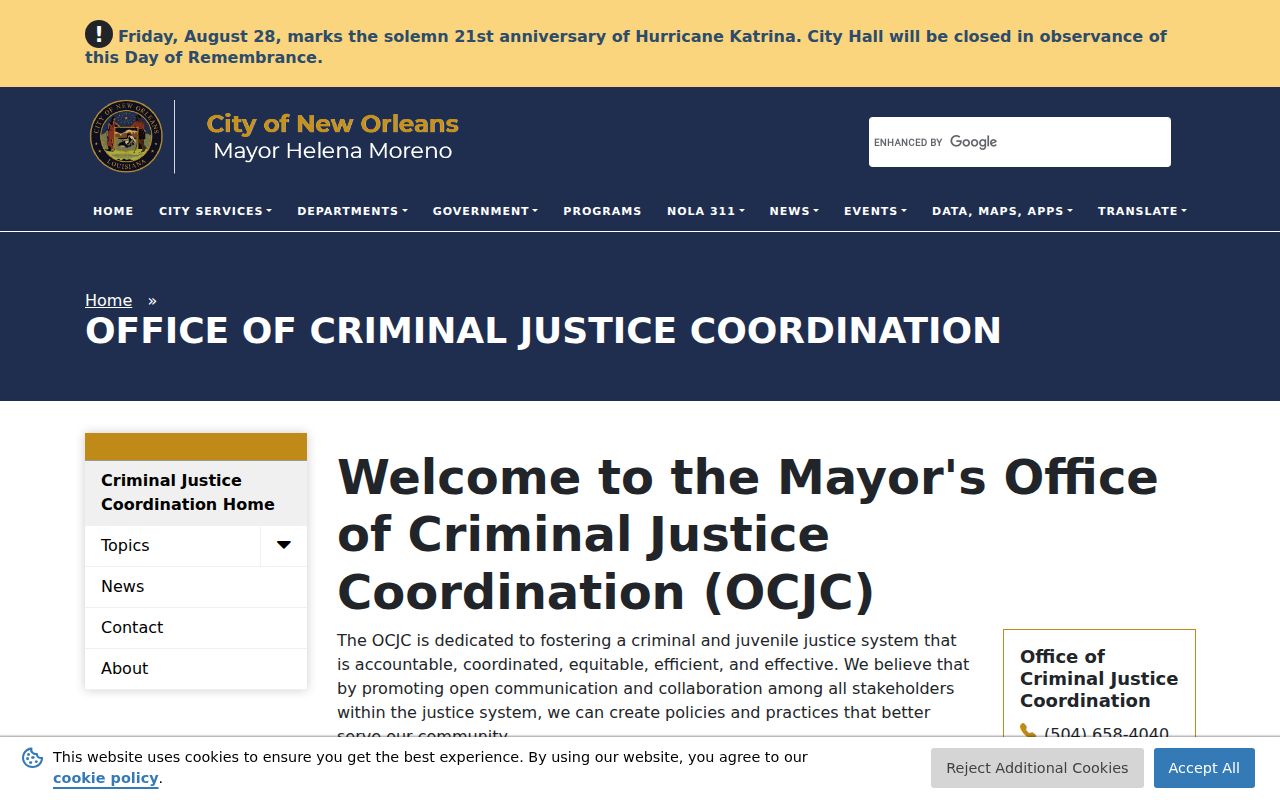
Keep court dockets, jail status, state custody, and federal custody separate because each has a different keeper and update cycle.
New Orleans Traffic Case Search
A traffic or municipal citation can supply a middle name, date of birth, case number, and dated New Orleans connection. The Municipal and Traffic Court portal searches only that court and tells users to contact staff about cases filed before 2002. Compare the date of birth or case number before assuming two similar names refer to the same person.
The official search interface is shown in the manifest image.
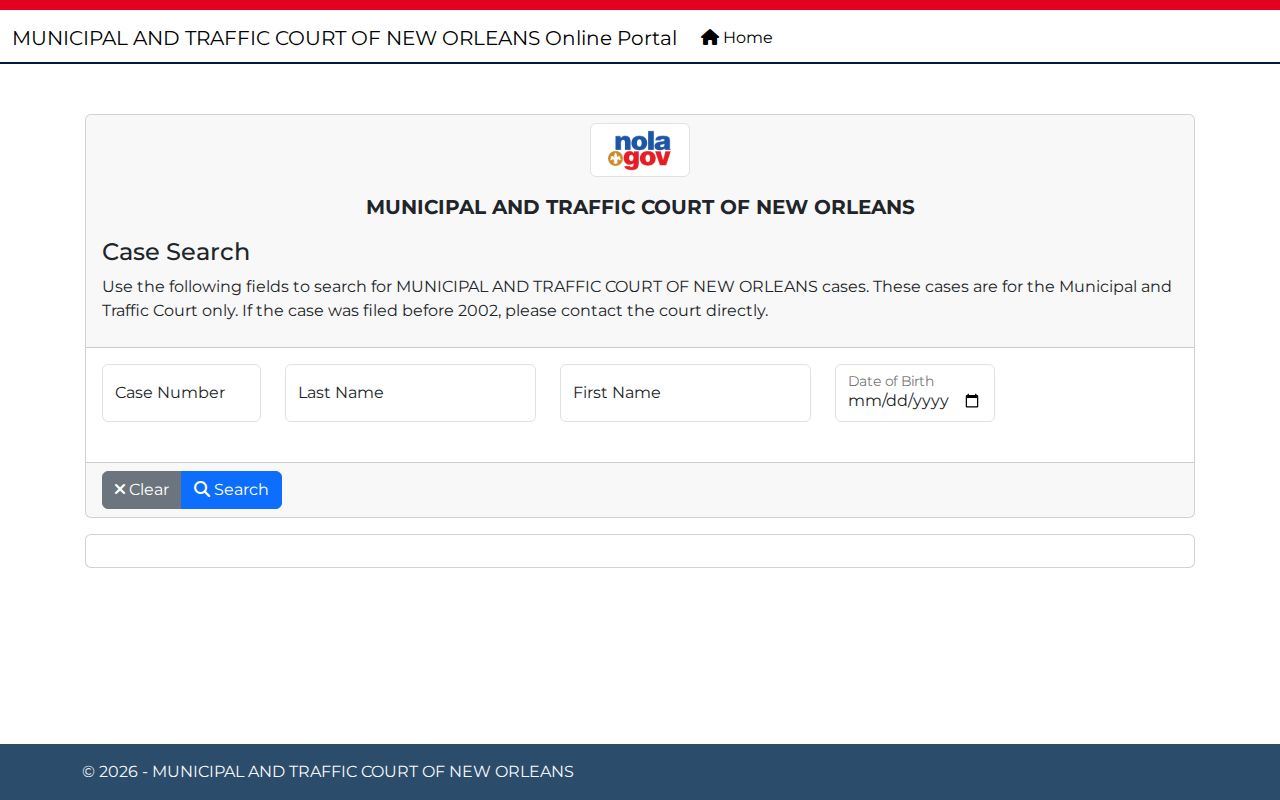
A result is a docket lead. Ask the court for the underlying record or certified disposition when the distinction matters.
Protected New Orleans Addresses
Louisiana's Address Confidentiality Program gives eligible survivors a substitute mailing address. Under R.S. 44:51 through 44:57, participant name and physical-address records are confidential, and voter records use the substitute address. The program is not a clue to reverse-engineer. Stop when an official system withholds a protected location.
Lawful use. Public records may support genealogy, estate work, reconnection, consumer verification, and civic research. Never use them to stalk, harass, intimidate, or harm a person.
Commercial people-finder data can be stale, merged, or sourced from unclear feeds. Official custodians explain the record's date, purpose, and correction route. A disputed item should be corrected with the office that created it, not copied into another directory.
New Orleans Records Request Route
The Louisiana Public Records Law, R.S. 44:1 and following, covers records made or held in public business subject to exemptions. R.S. 44:32 allows inspection and copies, reasonable copy charges, and advance payment, but not an examination fee. A request should identify the document, office, date range, person, parcel, instrument, or case number. Ask for electronic delivery when available.
Use the City public-records request page for City departments. Contact the Civil Clerk directly for land or civil material and the Criminal Clerk for criminal files. If status or exemption is uncertain, the custodian must provide the written notice required by law. Narrow requests reduce delay and fee surprises.
A useful packet includes the exact spelling searched, alternate names, the date range, and the identifier produced by the first portal. For land, attach the GeoPIN, square, lot, and instrument number. For a court file, give the case number and specify whether an index entry, full file, or certified copy is needed. Vital-record requests require the event details, relationship, identification, and the correct agency form. An archive question should name the directory year, newspaper title, church, ward, or former street name. These details let New Orleans custodians search the right series without guessing what the requester meant.
Verify New Orleans Record Claims
New Orleans records are changing systems while old paper series remain essential. A 2025 incident sent city workers to search a landfill for discarded criminal-court records. Modernization can improve access, but it does not make every historic file complete. Save the URL, access date, instrument or case number, and custodian contact for each important result.
Scams also imitate official work. Courts do not demand jury-duty payment by unsolicited call or text. A deed warning should be checked against the Civil Clerk's recorded instrument, and owners can review the current recording-notification service promoted by the Assessor. The official source matters more than a caller's urgency.
Compare the record date with the question being asked. An assessment refreshed this week may still list an owner whose mailing address is outside Orleans Parish. A voter registration records election status, not every person at the property. A directory volume reflects its publication cycle, while an obituary or succession may explain why a name disappears. When sources conflict, keep both citations and ask the office that created the newer record about correction or superseding documents.
The Louisiana license directory capture illustrates the safer pattern: begin at a government routing page and continue to the board that owns the record.
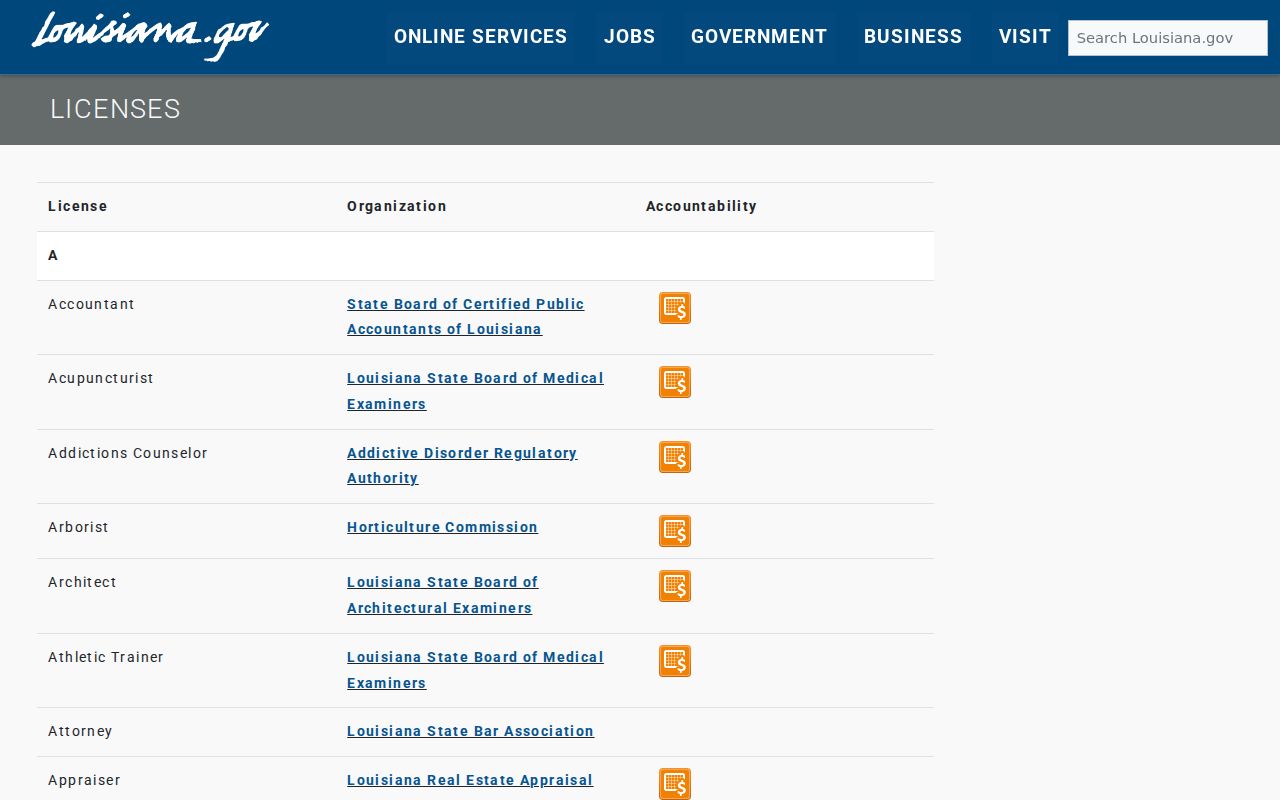
Verify the name, record number, date, status, and office before acting on any directory result.